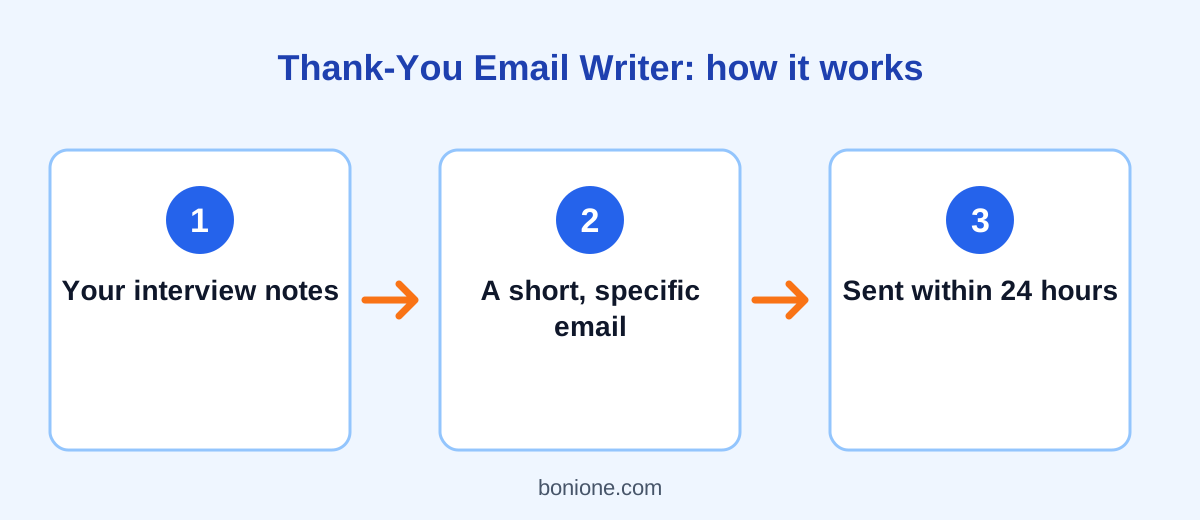
A good thank-you email is short, specific, and sent quickly. It does not need fancy language. It needs to show that you are grateful, that you were listening, and that you remain interested in the job. This guide walks you through exactly how to write a thank-you email after an interview, including timing, subject lines, a simple structure, a template, and examples for different situations.
When to send it
Send your email within 24 hours of the interview, ideally the same day or the next morning. The conversation is still fresh for both of you, and the hiring team may be comparing candidates right away. If the interviewers told you they would decide within a day or two, send the note as soon as you can, for instance in the evening after the interview.
Do not worry about sending it too early. A message that arrives a few hours after the meeting looks organized and enthusiastic, not pushy.
Before you write: collect a few notes
While the interview is fresh, jot down three things:
- The interviewer's full name, job title, and email address. Check the spelling carefully.
- One or two moments that stood out, such as a project they described, a challenge the team faces, or a question you enjoyed.
- Anything you wish you had said, such as a relevant achievement you forgot to mention.
These notes become the specific details that make your email feel personal.
Choose a clear subject line
Keep the subject simple and easy to recognize. Good options include:
- Thank you, [Job Title] interview
- Thank you for your time today
- Following up on our conversation about [topic]
Avoid vague or clever subjects. A clear subject helps the message stand out in a busy inbox.
The simple four-part structure
- Greeting: Use the interviewer's name, such as "Dear Ms. Alvarez," or "Hello Daniel,", matching the formality of the conversation.
- Thanks with a specific detail: Thank them for their time and mention one thing you learned or enjoyed discussing.
- Your value: In one or two sentences, connect a strength to something they said the team needs. If you forgot to mention something relevant, add it here.
- Close: Restate your interest, say you look forward to the next step, and sign off politely.
Keep the whole email between 100 and 170 words.
A thank-you email template you can adapt
Subject: Thank you, [Job Title] interview
Dear [Interviewer's name],
Thank you for taking the time to speak with me today about the [job title] role at [company]. I especially enjoyed hearing about [specific topic or project], and it made me even more interested in joining the team.
Our conversation about [challenge or goal] reminded me of my work on [relevant experience], where I [brief result]. I believe I could bring the same focus to [their goal].
Thank you again for your time and consideration. I look forward to hearing about the next steps, and please let me know if I can share anything else.
Best regards, [Your name] [Phone number]
A worked example
Here is how a filled-in message might look for a customer success role:
Subject: Thank you, Customer Success Manager interview
Dear Ms. Alvarez,
Thank you for meeting with me today about the Customer Success Manager role at Northwind. I especially enjoyed hearing how your team is redesigning the onboarding process for new clients.
That topic connects closely to my last position, where I rewrote our welcome emails and created a short video guide for new customers. It reduced the number of basic support questions, and I would be excited to bring the same approach to your onboarding project.
Thank you again for your time. I look forward to hearing about the next steps.
Best regards, Sam Carter
Notice that it is short, specific, and honest. Use your own true experience, and never invent results.
Adjust the tone to the situation
- Formal industries such as law, finance, or government: use a more reserved tone and full titles.
- Startups and creative fields: a friendlier, more conversational style is usually fine.
- Panel interviews: send each person an individual email with a different detail from the conversation.
- Video interviews: the same rules apply. Mention something you discussed, not the technology.
- After a weaker interview: briefly address a gap, for example, "I would like to add a bit more detail about my experience with..."
What if there is no reply?
Silence is common, and it does not always mean rejection. Hiring often takes longer than expected. If the interviewer gave you a timeline, wait until it passes. If they did not, wait about a week and send a short, polite follow-up: thank them again, restate your interest, and ask whether there is any update on the process. Keep it courteous and brief, and do not send repeated messages.
Common mistakes to avoid
- Sending the same identical message to every interviewer.
- Writing a long email that repeats your resume.
- Making mistakes in names, the company name, or the job title.
- Using too much flattery, which can sound insincere.
- Mentioning salary or benefits in a thank-you note.
- Forgetting to proofread. Read the email aloud once before you press send.
Save time with the Thank-You Email Writer
If you find it hard to start, use the free Thank-You Email Writer. Enter the job title, the interviewer's name, and your notes on what you discussed, and choose a tone. You will receive a draft with a subject line and quick sending tips. Then edit it: add a personal touch, verify each fact, and make sure it sounds like your own voice.
Frequently asked questions
How long should a thank-you email be?
Usually 100 to 170 words. That is long enough to be specific and short enough to be read in half a minute.
Should I mention the job again in the email?
Yes. Name the role in the subject line or the first sentence, so the reader knows exactly which position you mean, especially if they are hiring for several.
Is it acceptable to send a thank-you message on LinkedIn?
An email is generally the clearest and most professional choice. A brief LinkedIn message can be a supplement, especially if you do not have an email address.
Final thoughts
A strong thank-you email follows a simple recipe: send it within a day, use a clear subject line, thank the interviewer with a specific detail, connect your strength to their needs, and close politely. Keep it short and honest. To learn why this small step is worth your time, read why to send a thank-you email after an interview, and practice your answers for the next round with the Interview Simulator.