You finish the interview, shake hands or close the video call, and feel relieved. It is tempting to consider the job done and wait for the reply. But one small step can help you stay in the interviewer's mind: a short thank-you email. It takes only a few minutes, yet many candidates skip it. This article explains why a thank-you email after an interview matters, when it helps most, what to avoid, and how a thank-you email writer can make the task easy.
Does a thank-you email really matter?
Honestly, it will not turn a weak interview into a strong one, and no email can guarantee a job offer. Practices differ between companies, and some hiring managers pay it little attention. But it costs you almost nothing, and it can help in several ways. In a close decision between two well-qualified candidates, small signals of professionalism and genuine interest can make a difference. The reverse is also true: skipping a courtesy that other candidates provide can leave a slightly cooler impression.
Think of it as part of the interview, not an afterthought. The conversation shows what you can do. The follow-up shows how you communicate and how you treat people.
What a good thank-you email accomplishes
- It expresses gratitude. The interviewer gave up time to meet you. Thanking them is simply polite.
- It reinforces your fit. In two or three sentences you can remind them of the strength that best matches their needs.
- It shows you were listening. A specific reference to something discussed proves that you engaged with the conversation.
- It lets you add something you missed. If you forgot to mention a relevant achievement or wish you had answered a question differently, the email gives you a short, natural chance to add it.
- It shows real interest. Employers want to hire people who are motivated, and a prompt, thoughtful message signals it.
- It demonstrates written communication. For nearly every role, clear writing is a valuable skill.
Why people skip it, and why they should not
Candidates often skip the thank-you email for understandable reasons. Some feel awkward and are not sure what to say. Others assume it is pointless, or worry that they will seem pushy. In practice, a brief, polite email rarely reads as pushy. The real risk is a message that is long, generic, or full of mistakes, and that risk is easy to manage with a simple structure and a careful proofread.
When it matters most
A thank-you email is valuable after every interview, but it is especially worth the extra care when:
- The role is competitive and several candidates are close in qualifications.
- You spoke with multiple people, and each one may have a say in the decision.
- The interview had a gap you would like to fill, such as an unanswered question.
- The job involves communication, sales, client service, or writing.
- The hiring timeline is short, and a prompt note can arrive before a decision is made.
What to avoid in a thank-you email
Most weak follow-up emails fall into the same traps:
- Being generic. "Thank you for your time" alone could be sent to any employer. Add one specific detail.
- Being too long. Aim for about 100 to 170 words. Nobody wants to read an essay.
- Repeating your whole resume. Mention only one relevant strength.
- Sounding desperate or demanding. Avoid asking for an immediate decision.
- Making errors. A misspelled name or the wrong company is a noticeable mistake.
- Waiting too long. A note sent a week later loses most of its value.
How a thank-you email writer helps
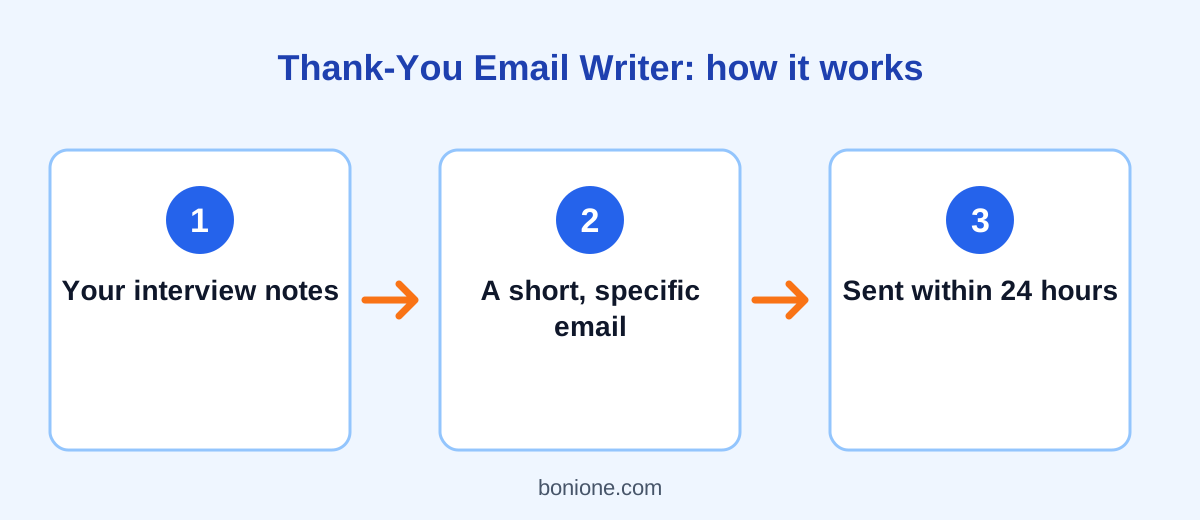
The hardest part of a thank-you email is usually getting started, especially when you are tired after an interview and unsure of the right tone. A thank-you email writer solves that problem. You add the role, the interviewer's name, and a few notes about what you discussed. The tool returns a short draft with a subject line, which you can edit and send.
Our free Thank-You Email Writer lets you choose the tone, such as professional, warm, enthusiastic, or concise, and it also adds quick tips on sending. Because the draft is built from your own notes, it can refer to real moments from the conversation.
Remember that a draft is only a starting point. It does not know how the interview felt, so add a personal touch, check that every fact is right, and delete any phrase that does not sound like you.
A quick checklist before you send
- Is the interviewer's name spelled correctly?
- Did you mention at least one specific topic from the conversation?
- Is the email under about 170 words?
- Does it restate your interest in the role?
- Have you proofread it, ideally out loud?
- Will you send it within 24 hours?
For a full walkthrough with a template, read our guide on how to write a thank-you email after an interview.
If you are worried about sounding repetitive, remember that the interviewer will read your note once, not five times. What matters is that it feels sincere and useful, so focus on one clear thought rather than trying to say everything.
Common questions
Should I email every interviewer?
If you met more than one person, yes, if you have their contact details. Write a separate note for each, with a different detail from each conversation, instead of sending the same message to everyone.
Is email better than a handwritten note?
Email is faster and is usually the practical choice, because hiring decisions can move quickly. A handwritten note can be a nice extra in some fields, but it should not replace a timely email.
What if I do not hear back?
That is common. Wait for the timeline the interviewer gave you. If it passes, a brief, polite follow-up is reasonable, and it is fine to ask whether there is any update.
Final thoughts
A thank-you email will not replace a strong interview, but it is a small, low-effort way to show gratitude, reinforce your fit, and keep a positive impression. Keep it short, specific, and prompt, and proofread it carefully. If you want a quick first draft, try the free Thank-You Email Writer, and prepare for your next conversation with the Interview Simulator.