For many jobs today, your LinkedIn profile is the first thing a recruiter looks up after reading your application, and sometimes it is the first thing they see about you at all. It works like a public resume that is searchable, always available, and visible to people you have never met. If it is empty or unclear, you lose chances you never knew existed. This article explains why your LinkedIn profile matters, what recruiters tend to look at, and how a LinkedIn profile optimizer can help you improve it in a short time.
How recruiters use LinkedIn
Recruiters and hiring managers use LinkedIn in two main ways. First, they search. They type job titles, skills, and locations into the search bar and browse the profiles that come up. Second, they check. After receiving your resume or hearing your name from a colleague, they open your profile to confirm your experience and see how you present yourself.
Both uses reward a profile that is clear and complete. In search, the words in your headline, About section, and skills influence whether you appear at all. In a quick check, a profile that matches your resume and adds context builds trust. A profile that contradicts your resume, or looks abandoned, raises doubts.
Why a strong profile gives you an advantage
It makes you findable
Recruiters cannot contact someone they cannot find. If your headline says only "Student" or "Looking for opportunities," you give the search nothing to match. A headline with your target role and key skills gives you a far better chance of showing up for relevant searches.
It supports your application
A resume is short and formal. LinkedIn gives you more room to show your personality, your projects, and the way you describe your work. When a recruiter sees a consistent story across both, your application feels more credible.
It opens doors you did not apply to
Some opportunities never reach a public job board. Recruiters and contacts may message you directly if your profile matches what they need. A profile that clearly says what you do and what you want makes those messages more likely and more relevant.
It helps you build a professional network
Connections, comments, and shared posts let you meet people in your field. A good profile makes a strong first impression when someone accepts your request or reads your comment.
What recruiters look at first
While every reader is different, most scan the top of a profile in a few seconds. The parts that usually matter most are:
- Headline: Your title and value in one line.
- Photo: A clear, friendly, professional image.
- About section: A short summary of what you do and what you aim for.
- Experience: Recent roles with clear results.
- Skills: Relevant terms that match the jobs you want.
Notice that the About section shows only its first lines before the "see more" link. That opening is valuable space and should not be wasted on a generic phrase.
Common problems with LinkedIn profiles
- A headline that lists only a current job title and says nothing about strengths.
- An About section that is empty, or one long paragraph with no structure.
- Experience entries that copy job duties without results.
- Few or irrelevant skills.
- No photo or a casual photo that does not suit your industry.
- Details that differ from the resume, such as dates or job titles.
How a LinkedIn profile optimizer helps
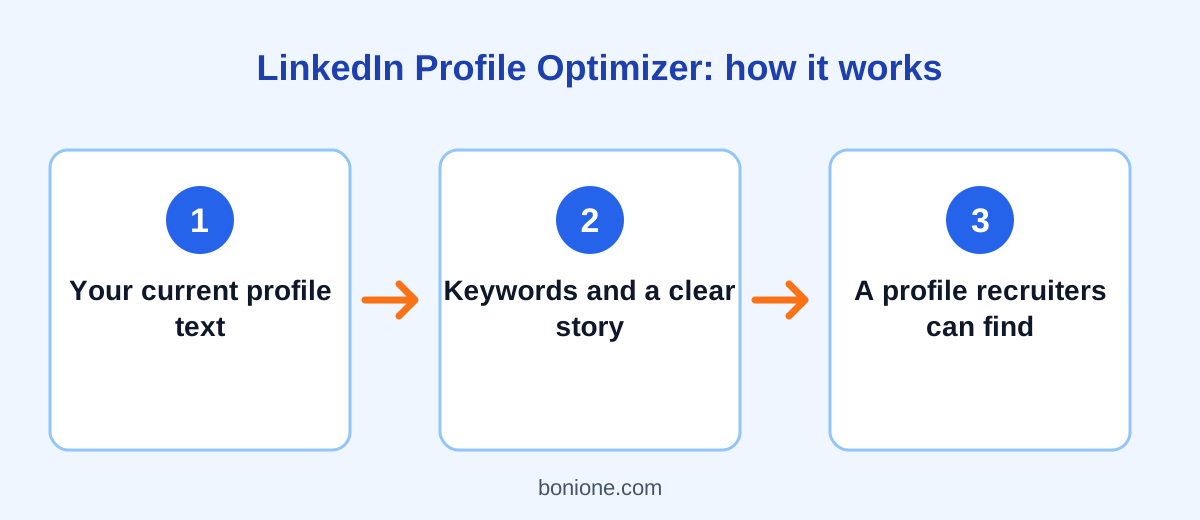
A LinkedIn profile optimizer reads the text you provide and suggests improvements. You paste your headline, About section, and experience, and describe your goal. The free LinkedIn Profile Optimizer returns several headline options, a rewritten About section, improved experience bullets, skill ideas, and quick wins.
The main value is speed and a fresh point of view. Writing about yourself is difficult, and most of us are either too modest or too vague. A tool can turn your rough notes into clear language, which you can then edit.
Limits to keep in mind
An optimizer only works with the text you give it. It does not connect to your LinkedIn account, judge your photo, or know your industry culture as well as you do. It can also produce wording that is a little generic. Always personalize it, remove anything untrue, and make sure your tone fits your field. Never add skills or achievements you cannot back up, because recruiters may ask about anything on your profile.
A simple plan for the next hour
- Update your photo and choose a headline that names your role and strengths.
- Rewrite your About section with a strong first two lines.
- Add results to your latest role.
- Add ten or more relevant skills.
- Compare your profile with your resume and correct any differences.
- Turn on the setting that tells recruiters you are open to work, if you are comfortable doing so.
For detailed formulas and examples, read our guide on how to optimize your LinkedIn profile.
Frequently asked questions
Do I need LinkedIn if I already have a resume?
In most professional fields, yes. A resume is what you send, while a LinkedIn profile is what people find. Having both gives you two ways to be discovered.
How often should I update my profile?
Review it whenever you finish a project, change roles, or start a job search. A quick check every few months keeps it current.
Is it safe to share my information on LinkedIn?
Share only what you are comfortable making visible. Leave out your home address, ID numbers, and private contact details, and review the privacy settings in your account.
One more point deserves attention: consistency over time. A profile that shows recent activity, updated roles, and clear skills signals that you are engaged in your field. You do not need to post every day. Simply keeping your information current, and occasionally sharing or commenting on relevant topics, helps recruiters feel that you are approachable and serious about your career.
Final thoughts
Your LinkedIn profile works for you around the clock. A clear headline, a strong About section, and results-focused experience can make the difference between being overlooked and being contacted. Use a LinkedIn profile optimizer to get a solid draft, then add your own voice and facts.
Ready to start? Open the free LinkedIn Profile Optimizer and paste your current profile text.