Receiving a job offer feels wonderful, and the urge to accept immediately is strong. After weeks of applications and interviews, the last thing you want is to risk the opportunity by asking for more. But this moment is also the point where you have the most influence over your pay, because the employer has already decided that they want you. Learning to negotiate is one of the most valuable career skills, and a salary negotiation coach can help you prepare. This article explains why negotiation matters, what you can negotiate, and how to approach it calmly.
This article offers general information, not financial or legal advice.
Why negotiating your salary matters
The starting salary you accept often becomes the base for what comes after. Raises and bonuses are frequently calculated as a percentage of your current pay, and future employers may ask about your salary history where the law allows it. A small difference at the start can therefore grow over the years. Even a modest, well-supported increase can add up across a long career.
Negotiation also affects how you are seen. A polite, prepared conversation about pay shows that you understand your value and can communicate about business topics. Many employers expect some discussion and build flexibility into their offers, although how much room exists varies by company, role, and budget.
Why so many people avoid it
Most people do not negotiate for understandable reasons:
- Fear of losing the offer. We worry that asking will seem ungrateful.
- Lack of information. We do not know what a fair number looks like.
- Discomfort with talking about money. It can feel awkward or even rude.
- Not knowing what to say. Without the right words, silence feels safer.
Each of these can be reduced through preparation. When you know your value, have a reasonable number, and have practiced a script, the conversation becomes much less intimidating.
What negotiation actually is
Negotiation is not a fight. It is a collaborative conversation in which both sides try to reach an agreement that works. You are not demanding; you are explaining why a particular package fits your experience and the role, and asking whether it is possible. The best negotiators stay friendly, curious, and specific.
What you can negotiate besides base pay
If the employer cannot move on salary, there may be flexibility elsewhere. Consider asking about:
- A signing bonus or relocation support.
- A performance review and possible raise after six months.
- More paid leave or a flexible schedule.
- Remote or hybrid work options.
- A budget for training, courses, or certifications.
- A different job title that reflects your responsibilities.
- Benefits such as health coverage, retirement contributions, or equipment.
Think about which items matter most to you, and rank them before the conversation.
Common myths about salary negotiation
"They will withdraw the offer if I ask"
When you negotiate politely and with a reasonable basis, an employer withdrawing the offer is uncommon, though no outcome can be guaranteed. Expressing enthusiasm for the role and keeping a collaborative tone greatly reduces the risk.
"I should accept quickly to show I am grateful"
You can be grateful and still take a day or two to review the details. Asking for time is normal, and a thoughtful employer will understand.
"Negotiation is only for senior people"
Early-career candidates can negotiate too, though they may focus on different items, such as training, a review date, or flexibility.
"Only salary matters"
The whole package counts. A slightly lower salary with strong benefits, growth, and flexibility may suit you better than the reverse.
How a salary negotiation coach helps
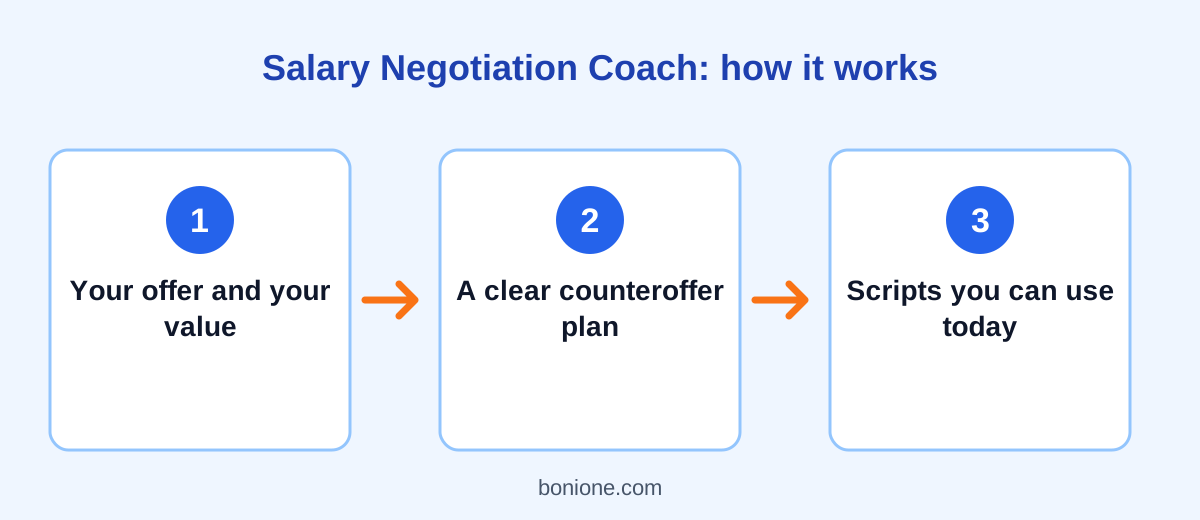
Preparing for a negotiation involves three challenges: organizing your case, choosing your words, and anticipating the reply. A salary negotiation coach helps with all three. You describe the offer and your value, and it returns a structured plan: an assessment of your position, a clear ask, an email script, a short phone script, likely pushback with suggested replies, other items to negotiate, and next steps if the answer is no.
Our free Salary Negotiation Coach works this way. It is designed to help you feel prepared and calm, not to hand you a magic number.
What the coach cannot do
Be careful about two things. First, the coach does not quote market salaries. Pay varies by country, city, industry, and company, and figures go out of date. Research current numbers from reliable local sources such as official statistics, industry surveys, salary reports, and people in similar roles, and then enter your own target. Second, it does not know your full situation, including your finances, your alternatives, or the company's budget. Treat its advice as preparation, and use your judgment.
How to prepare in five steps
- Research a reasonable range for your role, location, and experience.
- List your strongest points: results, skills, and anything that sets you apart.
- Decide your target, your acceptable minimum, and your walk-away point.
- Practice out loud, alone or with a friend.
- Choose the medium, whether email or a call, and schedule it.
For a detailed method with scripts, read our guide on how to negotiate salary.
Frequently asked questions
When should I bring up salary?
Generally after you receive an offer, when the employer has shown that they want you. If asked about expectations earlier, you can give a researched range or say you would like to learn more about the role first.
What if I have no other offer?
You can still negotiate. Base your request on your skills, experience, and the value of the role, not on competing offers. Never invent another offer.
Is negotiating worth it for a small increase?
Often, yes, because the effect compounds over time, and the conversation itself is good practice. But weigh it against the whole package and your priorities.
Final thoughts
Negotiating your salary is a skill that can be learned. Understand your value, research realistic numbers, prepare a clear and polite ask, and consider the full package. A salary negotiation coach can help you organize the plan and find the words, while you supply the facts and make the final decisions.
When you are ready, try the free Salary Negotiation Coach. To make sure your application materials support your case, review your resume with the Resume Optimizer.