Few decisions feel as heavy as choosing a career direction. Whether you are finishing school, feeling stuck in a job, or thinking about a complete change, the questions are hard. What am I good at? What would I enjoy? What is realistic? Many people postpone these questions for years because they do not know where to begin. A career path advisor can give you a starting point. This article explains what it does, why it helps, and how to use it in a way that supports your own judgment.
Why choosing a career direction feels so hard
There are usually three sources of difficulty. The first is too many options. The job market includes thousands of roles, many of which you have never heard of, so it is hard to imagine what a day in a given job is actually like. The second is unclear self-knowledge. We often know what we dislike better than what we want, and we may underestimate skills that feel ordinary to us. The third is fear of choosing wrongly. When every path seems permanent, it is easier to do nothing.
The result is a familiar pattern: endless browsing of job boards, comparing yourself with other people, and no real progress. What helps is a structured way to turn a vague feeling into a few concrete options.
What a career path advisor does
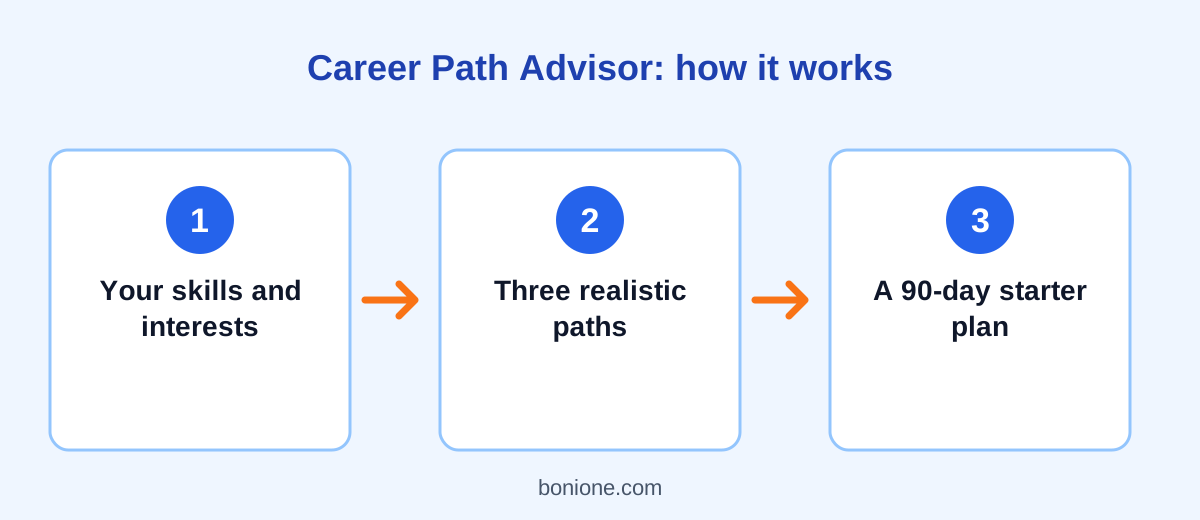
A career path advisor asks about your background, skills, interests, and goals, then suggests realistic directions. Instead of a single answer, a good advisor offers several options and explains why each one might fit, what skills you would need to build, and what a first step looks like.
Our free Career Path Advisor gives you three career paths with the reasons they suit you, typical entry roles, skills to develop, and a 90-day starter plan. It also includes an honest section on trade-offs and three actions to take this week. You describe yourself, and the tool does the structuring.
Six reasons it helps
1. It turns a vague feeling into options
Saying "I want something different" does not lead anywhere. Seeing three named paths gives you something concrete to react to. You may love one, dislike another, and realize a third is close to what you want. Reactions are useful data.
2. It connects your existing skills to new roles
Many career changers underestimate how much of their experience transfers. Customer service builds communication and problem solving. Teaching builds planning and presentation. An advisor can point out these links so that a change feels less like starting over.
3. It reveals skill gaps early
If a path requires a skill you do not yet have, it is better to know now. The advisor lists what to build, so you can decide whether the effort is worth it and how to begin, for example with a short course or a small project.
4. It offers a plan, not just an idea
An idea without a next step fades quickly. A 90-day starter plan breaks the journey into small actions, such as researching roles, talking to people in the field, and completing a first project. Small steps reduce the fear of choosing.
5. It is available whenever you need it
Professional career coaching is valuable, but it can be expensive or hard to schedule. A free tool lets you explore early, when your questions are still forming, and arrive at a coaching session with clearer thoughts.
6. It supports honest thinking
When you write down your skills, interests, and limits, you must be specific. That exercise alone often brings clarity, even before you read the result.
What a career path advisor cannot do
It is important to keep expectations realistic. An advisor cannot predict the job market in your city, and it does not know your family situation, finances, or health. Its suggestions are based on the text you provide and on general patterns. It may miss niche roles or local opportunities, and it can suggest paths that look good on paper but do not match your personality.
For that reason, we avoid presenting salaries or statistics as facts. Check current, local information from official sources and job postings. And above all, talk to real people who work in the roles you are considering. A twenty-minute conversation can teach you more than any report.
How to get better results
- Be specific about your background: studies, jobs, projects, and volunteer work.
- Include what you enjoy, not only what you are good at. Energy matters.
- Mention your limits, such as time, budget, location, or family responsibilities.
- State your goal, for example "change fields within a year" or "find my first job."
- Run it more than once with different assumptions, then compare the results.
What to do after you get your results
- Highlight the path that sparks the most curiosity, even if it feels risky.
- Research three real job postings for that path and note the skills they ask for.
- Find two people in that role and ask for a short conversation.
- Try a small test, such as a free course or mini project, before committing.
- Update your materials for the direction you choose, starting with the Resume Optimizer.
If you want a more detailed method, read our guide on how to choose a career path.
Frequently asked questions
Can it tell me the one perfect career?
No. There is rarely a single perfect answer. A good advisor gives you options and trade-offs so that you can choose with your eyes open.
Is it useful for students?
Yes. Students can describe their studies and interests to see possible directions and skills to build before graduation.
What if none of the suggestions feel right?
That is useful information too. Adjust the details you gave, especially your interests and limits, and try again. Notice what you dislike about each option, and use it to refine your search.
Final thoughts
A career path advisor will not make the decision for you, but it can make the decision less frightening. By turning a vague feeling into three concrete paths, showing the skills to build, and offering a first 90-day plan, it gives you momentum. Combine it with conversations with real people and small experiments, and you will move forward with more confidence.
Ready to explore? Try the free Career Path Advisor and see where your skills and interests might lead.